Well today there was a conference called held by the NIH and NNPDF to update the community on the Cyclodextrin trial. The news was not what I was hoping for. They had to put the trial on a pause status due to an infection at the ommaya reservoir site in two patients and another (who is not in this trial) suffered from a brain bleed. The ommaya reservoir is like a port for a chemo patient but it is surgical placed in the front of the brain. The infection was cause by bacteria that sits on the skin that causes acne. At this time they are not sure if NPC patients are at a higher risk since this is a lipids disease or not. But they knew they couldn't continue with the trial with so many problems and not enough answers.
They put in on hold and got in contact with the FDA who in turn put an official hold on the trial and will send the NIH a letter stating what has to be done to get the trial off the hold status. The FDA was very pleased with the quick action by the team at the NIH for putting the trial on pause right away without first contacted them. The NIH will receiver the letter sometime next week and will inform the NPC community once they have a plan of action in place.
Dr. Porter did add that they did collect some promising results from the trial thus far. The bio-markers looked good and they got goo PK data. These results where from the patients receiving a very small dose of the cyclodextrin. Dr. Porter thought they would see nothing with this low of a dose, so that in itself is very hopeful!!
They do think that the infection was not drug related but device related. So he did go on to say that they will be looking at a lumbar injection as means to administer the drug. They do have concerns with how much of the drug will actually reach the brain but with the data collected from the trial he believes that they will be able to administer enough of the drug to reach the brain without causing toxicity.
There is a lot of work ahead for the NIH team but they are committed to get this trial back up and running as soon as they can. They could not give any kind of time line or dose levels at this time. I will keep everyone posted as information comes to me. Please say an extra prayer for the NPC community especially those in the trial that suffered an infection and the child who suffered a brain bleed. Thank you and God Bless!!

Showing posts with label npc research. Show all posts
Showing posts with label npc research. Show all posts


February 28, 2013
Rare Disease Fight Song

Fight rare disease, and sound her fame
Raise her Gold and Blue,
And cheer with voices true,
In the fight against rare disease.
Fight rare disease in every game
Strong of heart and true to Notre Dame.
We will ne'er forget her
And we'll cheer her ever,
In the fight against rare disease.
Chorus:
Fight rare disease at Old Notre Dame
Ending their neglect and cheering her name,
Send the volley cheer on high,
Shake all seven thousand down from the sky,
What though the odds be great or small
Old Notre Dame will win over all,
While her loyal students march
In the fight against rare disease.
January 26, 2013
NPC Press Release on the Cyclodextrin Trial
 | |
| Tylor is happy to announce along with the NIH........Drum Roll Please |
Dear Families and Friends,
The NNPDF central office received the following
press release from the National Institute of Health (NIH) NPC Clinic
from Dr. Forbes "Denny" Porter with an update on the Cyclodextrin Trial.
Click Here to see the press release.
January 12, 2013

December 6, 2012
More on the Cyclodextrin Trial
Below you will find the lastest on the Cyclodextrin Trial at the NIH. Unfortunately Tylor is not a candidate for this first trial because he is on more than one anti-seizure medication. We will be following this trial closely and we are hopeful that Tylor will be able to participate in the upcoming trial involving Cyclodextrin.
Dear National Niemann-Pick Disease Foundation Family Members,
The latest release pertaining to the upcoming NIH NPC clinical trial has been made available to the NNPDF. To view the NIH NPC Cyclodextrin Clinical Trial Flyer ~ dated: 11/28/12 ~ click here.
This study titled: 2-hydroxypropyl-B-cyclodextrin (HP-B-CD) in Niemann-Pick Disease, type C1, is in the process of being reviewed by the FDA and the team of researchers and physicians associated with the Therapeutics for Rare and Neglected Disease ~ Niemann-Pick Type C Disease Team (TRND NPC Team) at the NIH are hopeful that they will be able to begin enrolling patients in January of 2013.
The National Niemann-Pick Disease Foundation is pleased that we are able to forward this information along to our family membership. The NIH attached flyer specifies that interested parties should note your interest in possible trial participation by e-mailing a representative at the NIH: nichdnpc1@mail.nih.gov
Please note: If you do NOT have access to the internet or an e-mail account please contact the NNPDF Central Offices at the 920-563-0930 and we will assist you in reaching the appropriate contact individual(s) at the NIH for more information.
~ November 28th, 2012 ~
Cyclodextrin (HP-β-CD) for NPC1 Disease
~ Clinical Trial Strategy ~
UPDATE ~ November 28th, 2012 ~ UPDATE
Therapeutics for Rare and Neglected Diseases (TRND)
National Institutes of Health ~ Bethesda, MD
The latest release pertaining to the upcoming NIH NPC clinical trial has been made available to the NNPDF. To view the NIH NPC Cyclodextrin Clinical Trial Flyer ~ dated: 11/28/12 ~ click here.
This study titled: 2-hydroxypropyl-B-cyclodextrin (HP-B-CD) in Niemann-Pick Disease, type C1, is in the process of being reviewed by the FDA and the team of researchers and physicians associated with the Therapeutics for Rare and Neglected Disease ~ Niemann-Pick Type C Disease Team (TRND NPC Team) at the NIH are hopeful that they will be able to begin enrolling patients in January of 2013.
The National Niemann-Pick Disease Foundation is pleased that we are able to forward this information along to our family membership. The NIH attached flyer specifies that interested parties should note your interest in possible trial participation by e-mailing a representative at the NIH: nichdnpc1@mail.nih.gov
Please note: If you do NOT have access to the internet or an e-mail account please contact the NNPDF Central Offices at the 920-563-0930 and we will assist you in reaching the appropriate contact individual(s) at the NIH for more information.
This is indeed, a very exciting
time for all of our NNPDF family community and, more importantly, all
of our precious loved ones diagnosed with Niemann-Pick Disease Type C
.
We WILL Persevere in our Quest for a Cure!
Kind Regards, Nadine M. Hill
Executive Director; National Niemann-Pick Disease Foundation
For a historical timeline on the Cyclodextrin (HP-β-CD) for NPC1 Disease Clinical Strategy ~ outlined by the NNPDF ~ please follow the link above.
November 26, 2012
Cyclodextrin Trial News
Latest Update on Planning for NIH's Clinical Trial of Cyclodextrin
~ November 2012 ~
Cyclodextrin (HP-β-CD) for NPC1 Disease
~ Clinical Strategy ~
Nuria Carrillo, MD
Therapeutics for Rare and Neglected Diseases (TRND)
National Institutes of Health ~ Bethesda, MD
Cyclodextrin (HP-β-CD) for NPC1 Disease ~ Clinical Strategy ~
Created and presented by:
Nuria Carrillo, MD; Staff Clinician
Therapeutics for Rare and Neglected Diseases (TRND)
Division of Preclinical Innovation
National Center for Advancing Translational Sciences
National Institutes of Health ~ Bethesda, MD
April 30, 2012
Our Notre Dame Trip

Our trip to Notre Dame was a very rewarding experience. On Friday, March 23 we had lunch with the Rare Health Exchange students. I was amazed with how interested they were in Tylor and NPC. I figured it would be Ty, Sy and I at a table by ourselves but that definitely wasn't the case. The students were very excited to get to know Tylor. It was a great way for them to see how the disease is effecting his swallowing instead of just reading it in a medical book or having another doctor explain it to them.
After lunch I talked briefly to the class about the struggles getting Tylor diagnosed. I explained to them that some of the doctors Tylor was seen by didn't believe that there was anything wrong with him and sent us on way feeling ignored, upset and angry. I stressed that listening to the patient or parent is very important. They know their child better than anyone. I also talked to them about how time is the enemy when you are dealing with a rare disease and listening to the parent could lead to a quicker diagnosis. I spent time telling them how much we love Dr. Patterson and how professional he is yet very personable.
After I was done the students asked questions. They asked a ton of good questions and were very interested in how Dr. Patterson differs from the others we met on our journey. I am impressed with how interested and involved this group of students are. We also showed them pictures and video clips to show them how Tylor has progressed over the years. They were very happy that I shared them. It gave them a better idea of where Tylor was before the symptoms started to current.
 |
| Here are some of the students with Tylor and Sy |
Well after I talked to the class we got to tour the ND campus while the students finished their school day. Tylor got to meet the NPC mice. The ones we saw were 70 days old and just starting to show signs of NPC like tremors. They usually live to 140 days. The ND campus is beautiful...we got some great pictures.
 |
| Touchdown Jesus |


Friday night Dr. Halder, Pam (Dr. Halder's assistant), Will (her husband), Cleve (their son), Sy, Tylor and I went out to eat at a Japanese restaurant. We had never been to a restaurant where they cook the food at your table...I know we don't get out much. Anyway, Tylor loved it!! Our chef asked anyone if they wanted to catch food in their mouth, Will said sure and caught it. After that Tylor bent his head back and opened his mouth and he almost caught!!!
 |
| Tylor using his chop sticks |

The wonderful student had planned on taking us to a ND baseball game but they were calling for rain so we went to the College Football Hall of Fame. Tylor liked looking at the old uniforms and football equipment. We even got to throw some touch downs and kick some field golds. When we were down Tylor, Cleve, Aaron, and Will played football on the mini football field outside. We toured some more of the ND campus and ended the day with a wonderful dinner at an on campus restaurant.
 |
| Touchdown |

I can't say Thank You enough to the students who excepted Tylor, listened to his story, and spent the weekend with us!! You are all truly amazing and we wish you all the best.


Dr. Patterson Trip to Notre Dame

March 2, 2012 - Marc Patterson, M.D.
Chair - Division of Child and Adolescent Neurology, Professor of
Neurology, Pediatrics and Medical Genetics, Director - Child Neurology
Training Program Mayo Clinic. Dr. Patterson is board certified in
psychiatry and neurology (with special qualification in child neurology
and in neurodevelopmental disabilities). Dr. Patterson is on the
Scientific Advisory Board for the National Niemann-Pick Disease
Foundation.
At some point or another, most of us
realize the frailness of the bark upon which we sail. For many, steeped
in a cultural denial of death and blessed with good health, this
realization comes late. But, in the realm of rare diseases, the
awakening to pure vulnerability often comes at an early age and well
before the 72 years Hunton had secured when he wrote this verse. When
this awakening comes, it often appears as an “unknown tide” – in waves
of unanswered questions and grief. Then, it is vital, not to sink into
hopelessness or denial, but as another poet sets it, “to take arms
against a sea of troubles.”1 In our species, we first take up arms
against the dark and unanswered troubles by naming them and pushing away
speechless sorrow. The great botanist and father of classification,
Carolus Linnaeus, was called “God's registrar” and he wrote about the
significance of classification, which always begins at the boundary of
the unknown deep:
“The first step in wisdom is to know the things themselves; this notion consists in having a true idea of the objects; objects are distinguished and known by classifying them methodically and giving them appropriate names. Therefore, classification and name-giving will be the foundation of our science .” (Systema Naturae ,1735. Trans., M. S. J. Engel-Ledeboer and H. Engel (1964), 19.)
 |
|||||||||||||||||||

March 1, 2012
Notre Dame bound
I think most of you know that I sent all of Tylor's medical records to Notre Dame for medical students to review. They are working on setting up a website for doctors to use when diagnosing rare diseases. This will hopefully help the doctors diagnose some of these diseases sooner. Because I can speak from expericence the testing and waiting for six years was really hard. And Notre Dame is very invested in NPC because Ara Parseghian, a former ND football coach, lost three grandchildren from this horrible disease. Beside review medical records from patients they are also working towards a cure!
I meet Dr. Haldar, a professor at ND, in Virginia at the NNPDF family conference. I told her I was willing to help in anyway possible. Shortly after getting home I contacted all the doctors who had seen Tylor over the last eight years and had them forward his medical records to me. After receiving Tylor's records I had a conference call once a week with a couple of the students to review the records I sent and to give them more information of his current condition. I sent them photos and videos to give them an idea of Tylor before his syptoms started and where he is now.
Just recently we were invited to visit ND to meet the students and see the research center. I was very excited but with just starting a new job I figured it wasn't in the cards. But I thought if I don't ask I'll never know.....well I have to say I work for the best company ever! They told me I should jump at the opportunity to visit ND with Tylor. We will be heading to ND on March 22nd for three days. I am so looking forward to this expericence. I will take lots of pictures and update everyone when we get back.
I meet Dr. Haldar, a professor at ND, in Virginia at the NNPDF family conference. I told her I was willing to help in anyway possible. Shortly after getting home I contacted all the doctors who had seen Tylor over the last eight years and had them forward his medical records to me. After receiving Tylor's records I had a conference call once a week with a couple of the students to review the records I sent and to give them more information of his current condition. I sent them photos and videos to give them an idea of Tylor before his syptoms started and where he is now.
Just recently we were invited to visit ND to meet the students and see the research center. I was very excited but with just starting a new job I figured it wasn't in the cards. But I thought if I don't ask I'll never know.....well I have to say I work for the best company ever! They told me I should jump at the opportunity to visit ND with Tylor. We will be heading to ND on March 22nd for three days. I am so looking forward to this expericence. I will take lots of pictures and update everyone when we get back.
February 19, 2012
Pictures of Ty Bug
Here are some pictures of Tylor over the last past few months...sorry it took me so long.
 |
| Tylor and the Big Guy at NIH |
 |
| Ty's Gingerbread Man...Great Job buddy |
 |
| Jill, Tylor, and Me at the end of our trip at NIH |
 |
| Tylor waiting for his next appointment |
 |
| The peds neurologist |
 |
| Tylor enjoying his art and craft time |
 |
| Tylor with the Children's Inn service dog. |
 |
| Image of Tylor's swallow study |
 |
| Sleeping before the MRI, spinal tap, and skin biopsie |
 |
| Tylor's tubes for all the blood they had to draw. (NPC 60) |
 |
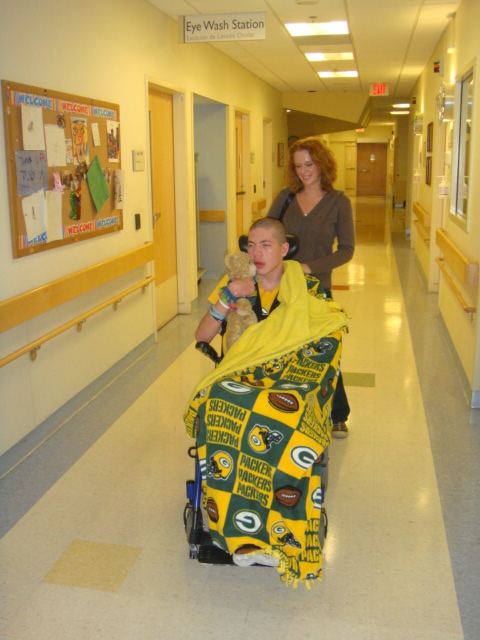
| Nicole starting Tylor's IV...he actually slept through it. |
 |
| Breaking out for a little walk between appointments |
 |
| Gingerbread house contest |
 |
| This was one of our favorites |
February 7, 2012
It's Been Forever!!!
So sorry I haven't posted anything in the past couple of month my computer has not been working. Many of you have been asking how Tylor is so I will try to update as well as I can.
Tylor is now NPC 60!!! He was officially the 60th kid with NPC to be seen and samples taken from for research at NIH.
Tylor's trip to NIH went very well. He traveled on the plane better than I thought he would. Jill brought here iPod Shuffle and Tylor really liked listening to them while he was people watching in the airport. Tylor only had to stay in the hospital for one night but we were able to have the room to chill in while waiting for his other appointments through out the week. It was much more relaxing for all of us to have a private place to sit instead of a waiting room. And we did a lot of waiting but hey it's not like we had anything else to do. We decided not to leave the NIH campus because going through security is as bad as the airport. But we found plenty for Tylor to do while we were there. He got to meet the Children's Inn service dog (and for the life of my I can't remember her name), went to the arts and crafts room, watched a movie on the big screen and ate popcorn, and there was even a Christmas party for all the pediatric patients. Tylor got to see Santa and make a gingerbread man there. They also had a huge display of gingerbread houses made by different departments at NIH. Tylor really liked looking at all of them...they were all amazing!! We got plenty of ideas for our gingerbread house next year.....
Well now onto the boring but important stuff. Tylor did very well with the sedation this time around. He was not sick after and was able to eat and drink just a few hours after he got out of recovery. They did find some atrophy in the brain, which is common with NPC as well as some high frequency hearing loss. He was such a trooper when he had his hearing test. The test was over two hours long and they still didn't get everything they wanted but Tylor had enough at that point. The morning after his sedation we had an appointment with the speech therapist but before we left for the hospital Tylor had 16 seizures and we pretty wiped out. The speech therapist tried to do some things with him but asked if we could come back the next day to see if she could get a better assessment of him. He did much better the next day and she commented on how much his truly understands. She was actually very surprised and happy about this. She was happy to hear that he has a Dynzvox to help with communication. Our last appointment was with the Peds neurologist. We talked about the medication his is on and a little bit of his health history. She then did some eye movement exercises with him, checked his reflexes and told us that she thought he was doing pretty good considering he had NPC.
After all the tests were completed we had a follow up meeting with Dr. Porter and Nicole. We went into great detail about Tylor's health history, the years of meeting with doctors while trying to get a diagnosis, previous tests he has had done and how things are going now. They gave us a patient copy of all the tests performed there. They still had some questions about past health history that I couldn't answer so I sent them the information when we got home to make sure his file is complete as possible.
He will have a follow up appointment in a year...
Before we left for NIH we did some holiday baking. Well not really baking because I can't and Tylor doesn't like to eat hard cookies. Jill, Liv, Kate, and Janelle came over to make chocolate dipped marshmallows and a gingerbread house. The girls really enjoyed helping their big brother! Thanks girls you are best sisters!!
The holiday was very nice this year....we were really busy but it was full of spending time with family and making great memories. Tylor got to spend both Christmas Eve and Christmas with both my family and his family. It was very nice that it worked out so well and that way both families get as much time possible with him.
January 16th Ty had his 6 month check up at Mayo. Just like the appointment at NIH, things went very well. Some change is meds but other than that they told us to keep doing what we are doing!! Again Dr. Patterson is amazed with how well his is doing!!! This makes me feel so good. There is not one day that I forget Ty had NPC but to hear his doctor talk about how well he is doing it puts some of the sad thoughts in the back of my mind.
Tylor also had his Special Olympics Basketball tournament last weekend. He was so alert and having a blast. He made a couple of good passing to different teammates who then scored. He was excited to see Ryan, Jill, Liv, Kate, Will, Drew, Rachael and her daughter, Teri and Touy came down to watch. His team took 2nd PLACE!!!
Well I think that is pretty much it!!! I am sure I will remember something else so you may see more posts with updates over the last couple of months.
Pictures will be added later.
Tylor is now NPC 60!!! He was officially the 60th kid with NPC to be seen and samples taken from for research at NIH.
Tylor's trip to NIH went very well. He traveled on the plane better than I thought he would. Jill brought here iPod Shuffle and Tylor really liked listening to them while he was people watching in the airport. Tylor only had to stay in the hospital for one night but we were able to have the room to chill in while waiting for his other appointments through out the week. It was much more relaxing for all of us to have a private place to sit instead of a waiting room. And we did a lot of waiting but hey it's not like we had anything else to do. We decided not to leave the NIH campus because going through security is as bad as the airport. But we found plenty for Tylor to do while we were there. He got to meet the Children's Inn service dog (and for the life of my I can't remember her name), went to the arts and crafts room, watched a movie on the big screen and ate popcorn, and there was even a Christmas party for all the pediatric patients. Tylor got to see Santa and make a gingerbread man there. They also had a huge display of gingerbread houses made by different departments at NIH. Tylor really liked looking at all of them...they were all amazing!! We got plenty of ideas for our gingerbread house next year.....
Well now onto the boring but important stuff. Tylor did very well with the sedation this time around. He was not sick after and was able to eat and drink just a few hours after he got out of recovery. They did find some atrophy in the brain, which is common with NPC as well as some high frequency hearing loss. He was such a trooper when he had his hearing test. The test was over two hours long and they still didn't get everything they wanted but Tylor had enough at that point. The morning after his sedation we had an appointment with the speech therapist but before we left for the hospital Tylor had 16 seizures and we pretty wiped out. The speech therapist tried to do some things with him but asked if we could come back the next day to see if she could get a better assessment of him. He did much better the next day and she commented on how much his truly understands. She was actually very surprised and happy about this. She was happy to hear that he has a Dynzvox to help with communication. Our last appointment was with the Peds neurologist. We talked about the medication his is on and a little bit of his health history. She then did some eye movement exercises with him, checked his reflexes and told us that she thought he was doing pretty good considering he had NPC.
After all the tests were completed we had a follow up meeting with Dr. Porter and Nicole. We went into great detail about Tylor's health history, the years of meeting with doctors while trying to get a diagnosis, previous tests he has had done and how things are going now. They gave us a patient copy of all the tests performed there. They still had some questions about past health history that I couldn't answer so I sent them the information when we got home to make sure his file is complete as possible.
He will have a follow up appointment in a year...
Before we left for NIH we did some holiday baking. Well not really baking because I can't and Tylor doesn't like to eat hard cookies. Jill, Liv, Kate, and Janelle came over to make chocolate dipped marshmallows and a gingerbread house. The girls really enjoyed helping their big brother! Thanks girls you are best sisters!!
The holiday was very nice this year....we were really busy but it was full of spending time with family and making great memories. Tylor got to spend both Christmas Eve and Christmas with both my family and his family. It was very nice that it worked out so well and that way both families get as much time possible with him.
January 16th Ty had his 6 month check up at Mayo. Just like the appointment at NIH, things went very well. Some change is meds but other than that they told us to keep doing what we are doing!! Again Dr. Patterson is amazed with how well his is doing!!! This makes me feel so good. There is not one day that I forget Ty had NPC but to hear his doctor talk about how well he is doing it puts some of the sad thoughts in the back of my mind.
Tylor also had his Special Olympics Basketball tournament last weekend. He was so alert and having a blast. He made a couple of good passing to different teammates who then scored. He was excited to see Ryan, Jill, Liv, Kate, Will, Drew, Rachael and her daughter, Teri and Touy came down to watch. His team took 2nd PLACE!!!
Well I think that is pretty much it!!! I am sure I will remember something else so you may see more posts with updates over the last couple of months.
Pictures will be added later.
December 7, 2011
Another NIH Update
Tylor had a bit of a rough morning. He had 14 seizures this morning because his appointments so the swallow study was a little hard as well as the speech appointment. So we will be going back tomorrow to redo those and see a neurologist. We also had our wrap up meeting with Dr. Porter and Nicole which went well. We will have to come back in a year for a follow up. Please pray that the seizure calm down so we can have a good trip home!
December 5, 2011
NIH Update
My computer has been down so I haven't really been able to keep everyone up on what is going on with Tylor.
Here is a little update about what has been going on at the NIH.
Tylor is fast asleep with Jill at the hospital...only one of could stay so we filpped a coin....Jill won so that means a night out on the town for me! Just kidding the NIH campus is locked down tighter that Fort Knox!! The security is crazy to get on campus. It's like the airport. But anyway Tylor is great today. He had a two hour hearing test which he was very good and then medical history with Dr. Porter and Nicole for a few hours. Tomorrow....Spinal tap, MRI, skin biopsy, and more hearing tests. They want to do more hearing because Tylor is losing some of his high frequency hearing which is normal for NPC. That's all for now...will update tomorrow.
Here is a little update about what has been going on at the NIH.
Tylor is fast asleep with Jill at the hospital...only one of could stay so we filpped a coin....Jill won so that means a night out on the town for me! Just kidding the NIH campus is locked down tighter that Fort Knox!! The security is crazy to get on campus. It's like the airport. But anyway Tylor is great today. He had a two hour hearing test which he was very good and then medical history with Dr. Porter and Nicole for a few hours. Tomorrow....Spinal tap, MRI, skin biopsy, and more hearing tests. They want to do more hearing because Tylor is losing some of his high frequency hearing which is normal for NPC. That's all for now...will update tomorrow.
November 5, 2011
Exciting News
 |
| Members of the NPC team....THANK YOU! |
Dear families and friends of the NPC community,
There has been a large, collaborative effort to initiate a cyclodextrin clinical trial at the National Institutes of Health (NIH) to systematically evaluate the safety and efficacy of cyclodextrin therapy for the treatment of Niemann-Pick type C (NPC) disease. As many of you are aware, we met with the Food and Drug Administration (FDA) this past Tuesday, November 1, 2011, to discuss the development program for cyclodextrin
The exceptional work that has been done in NPC animal models has guided the design of a human clinical trial. Together with the Therapeutics for Rare and Neglected Diseases (TRND) group at the NIH, as well as several NPC researchers, Johnson & Johnson, and consultants from RRD International, LLC, we are working to submit an Investigational New Drug (IND) application to FDA.
The first step in submitting the IND application to FDA (the perquisite to an initial clinical trial in patients) was to request a pre-IND meeting with FDA to receive the Agency’s feedback on our development program before the IND application is officially submitted. On November 1 we met with the FDA review division staff to discuss the proposed development plan for cyclodextrin and needs for the IND application package. The meeting was positive and the Agency provided helpful feedback focusing on the drug safety and toxicology data. We will have an additional meeting with FDA to focus on the clinical trial design, and FDA is working with us to get that meeting scheduled before the end of the year.
We view this as a very positive step toward pursuing cyclodextrin as a potential treatment for NPC disease. We are planning a scientifically rigorous trial that will allow us to test cyclodextrin in our patients safely and in a way that will provide as much information as possible. While specific details of the trial will not be available until we have agreement from FDA and approval from the NIH ethics review board, we will share information with the NPC community as it is available.
We continue to work toward our goal of starting the trial next year and feel that with the recent FDA feedback, we are on track to do so.
Thank you for your continued support and encouragement as we work together to find a treatment for NPC disease. This fight would not be possible without all of you.
Sincerely,
The TRND Team
October 11, 2011
What Matters Most-A book written by an NPC Mother.

Book about the Life of Chuck Beckman (NPC)
to Benefit NNPDF's Programs of Research
Released just in time for October Niemann-Pick Disease Awareness Month, What Matters Most: Living with the Young Adult Onset of Niemann-Pick Disease Type C (NPC) is a new book by Rozetta Beckman about her family's journey through Niemann-Pick Disease.
NPC took the life of Rozetta's son, Chuck, at the age of 36. He was diagnosed with NPC as a young adult, after symptoms began to surface when he was about 18 years old.
Proceeds from the book will be donated to the NNPDF for research into NPC.
To see a preview of the book and to place an order, visit:
Hardcover edition Paperback (color) Paperback (bl & wh) Downloadable ebook
September 17, 2011
NNPDF Family Conference 2011
This year the NNPDF Family Conference was held in Norfolk, VA at the end of July. Sy and I took Tylor along with Sy's Mom and Stepdad. We drove down, it took us about 18 hours. We arrive in Norfolk around 6:30am and I couldn't believe it the hotel had one room ready for us. So the five of us crashed for a few hours before hitting the sites.
Norfolk is beautiful! The view from our room was of the Naval ship yard and the Bay area. We did a little site seeing our first day there but it was also the start of the conference so we couldn't do a lot.

It was so nice to see the families we met in Seattle. We had over 225 people attend this years conference which makes it the biggest one to date!! There were a lot of new families so it was great to connect and bond with them. It is crazy how you can connect with someone you never met just because of this horrible disease. Also this year there were about 26 kids there....all I can say is WOW! I loved seeing all the kids interacting with one another. Our children are so precious.
Well I guess I should get on with what we learned at the conference.
On Friday we heard from Dr. Marie Vanier, she has been researching this disease for three decades, Dr. Dan Ory, Dr. Steve Walkley, and Dr. Fran Platt. This group of doctors gave an overview of NPC Disease research, Support of Accelerated Research (SOAR) updates, Updates on Miglustat and Cyclodextrin as therapeutics for NPC and combination therapy for NPC.
On Saturday we heard from Dr. Marc Patterson, Dr. Kasturi Halder, Dr. Dan Ory, and Dr. Denny Porter. This group talked about medical and clinical update. The topics included: NPC intro adn overview, assistance of undergrads in charaterizing clinical progression for NPC, biomarkers for NPC, development of the NIH Cyclodextrin clinical trial.
Through out the weekend we also did a lot of brainstorming on how to raise money for research for National Niemann Pick Awareness Month in October. We got to listen to the famous Humorist, Carol Ann Small, we learned about an iPad can help our children communicate with us better and of course we had a beautiful banquet dinner to end the conference.


I talked with Dr. Kasturi Halder, she is the Director at the Center for Rare and Neglected Diseases at the University of Notre Dame, about sending Tylor's medical records for the students to review. She was glad to take my information becasue with so few cases they are always looking for new NPC families. I am in the process of gathering all the medical records, I am only waiting on one doctor to get back to me.
I also talked breifly with Dr. Denny Porter, from NIH, about getting Tylor down there for the the NPC Natural History Study. He told me he would be glad to see Tylor and to call Nicole, his assistance, to set up the appointment. Nicole and I talked shortly after we got back. She explained that they would be performing all the test Tylor has had over at the NIH. That means more EEGs, MRIs, another skin biopies and spinal tap, a lot of blood with be taking, eye and hearing exams, and much more. So at first I thought do I really want to put Ty through all this again??? This information they gather from Tylor may help in the future and who knows maybe we will find out how it is processing in him. So we deceided to go for it. So Jill, Ty's Stepmom, Tylor and I are leaving Decemeber 4th and will return on December 9th!! We will keep you posted on how this go down there.
Well know on the the fun stuff...
After the conference we toured around Norfolk. We went on the SS Wisconsin and we drove on the Chesapeake Bay Bridge/Tunnel. That was so cool and weird at the same time. We also visited Grandma Mulgrew's brother in Maryland. We spent a day in D.C. and also got a little bit of relaxation time in before we had to go home. Here are some pictures!!


Norfolk is beautiful! The view from our room was of the Naval ship yard and the Bay area. We did a little site seeing our first day there but it was also the start of the conference so we couldn't do a lot.

It was so nice to see the families we met in Seattle. We had over 225 people attend this years conference which makes it the biggest one to date!! There were a lot of new families so it was great to connect and bond with them. It is crazy how you can connect with someone you never met just because of this horrible disease. Also this year there were about 26 kids there....all I can say is WOW! I loved seeing all the kids interacting with one another. Our children are so precious.
Well I guess I should get on with what we learned at the conference.
On Friday we heard from Dr. Marie Vanier, she has been researching this disease for three decades, Dr. Dan Ory, Dr. Steve Walkley, and Dr. Fran Platt. This group of doctors gave an overview of NPC Disease research, Support of Accelerated Research (SOAR) updates, Updates on Miglustat and Cyclodextrin as therapeutics for NPC and combination therapy for NPC.
On Saturday we heard from Dr. Marc Patterson, Dr. Kasturi Halder, Dr. Dan Ory, and Dr. Denny Porter. This group talked about medical and clinical update. The topics included: NPC intro adn overview, assistance of undergrads in charaterizing clinical progression for NPC, biomarkers for NPC, development of the NIH Cyclodextrin clinical trial.
Through out the weekend we also did a lot of brainstorming on how to raise money for research for National Niemann Pick Awareness Month in October. We got to listen to the famous Humorist, Carol Ann Small, we learned about an iPad can help our children communicate with us better and of course we had a beautiful banquet dinner to end the conference.
 |
| Carol Ann Small |


I talked with Dr. Kasturi Halder, she is the Director at the Center for Rare and Neglected Diseases at the University of Notre Dame, about sending Tylor's medical records for the students to review. She was glad to take my information becasue with so few cases they are always looking for new NPC families. I am in the process of gathering all the medical records, I am only waiting on one doctor to get back to me.
I also talked breifly with Dr. Denny Porter, from NIH, about getting Tylor down there for the the NPC Natural History Study. He told me he would be glad to see Tylor and to call Nicole, his assistance, to set up the appointment. Nicole and I talked shortly after we got back. She explained that they would be performing all the test Tylor has had over at the NIH. That means more EEGs, MRIs, another skin biopies and spinal tap, a lot of blood with be taking, eye and hearing exams, and much more. So at first I thought do I really want to put Ty through all this again??? This information they gather from Tylor may help in the future and who knows maybe we will find out how it is processing in him. So we deceided to go for it. So Jill, Ty's Stepmom, Tylor and I are leaving Decemeber 4th and will return on December 9th!! We will keep you posted on how this go down there.
Well know on the the fun stuff...
After the conference we toured around Norfolk. We went on the SS Wisconsin and we drove on the Chesapeake Bay Bridge/Tunnel. That was so cool and weird at the same time. We also visited Grandma Mulgrew's brother in Maryland. We spent a day in D.C. and also got a little bit of relaxation time in before we had to go home. Here are some pictures!!
 |
| Virginia Beach |
 |
| The fishing pier in Virginia Beach |

 |
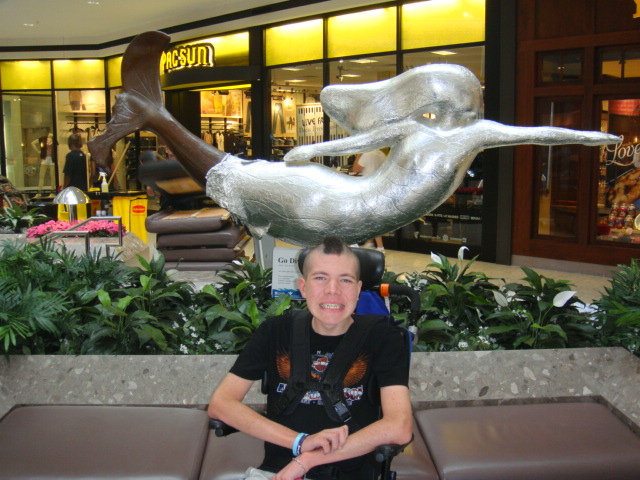
| Ty on the SS Wisconsin |

 |
| See how the bridge goes under the water |

 |
| Sy and Ty at the Capitol |

 |
| Tylor and I with the Wright brothers |
 |
| Eating Crab on the beach |
August 31, 2011
October Niemann Pick Awarness Challenge
 |
| Walk for a Cure in Memory of Riley Corbitt 2010 |
Stay tuned for more details as they come along from the National Niemann Pick Disease Foundation.
Subscribe to:
Posts (Atom)